
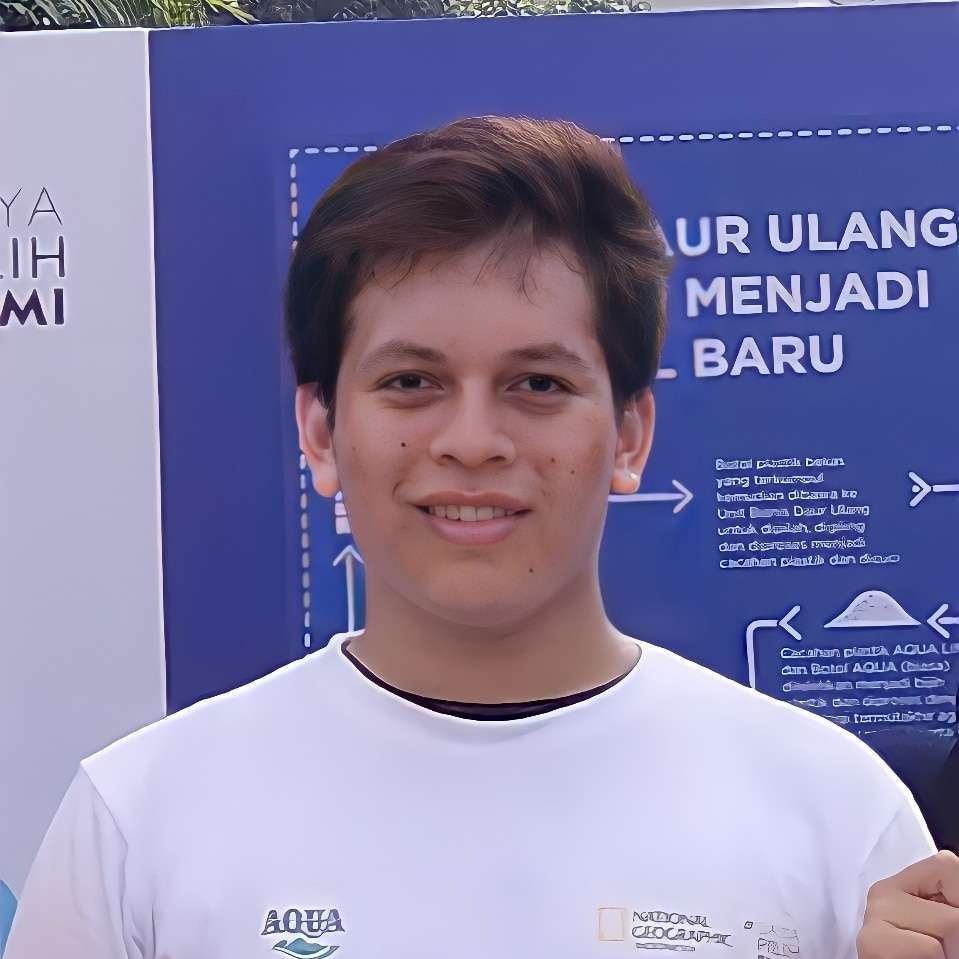
Andre Adikara
Software Developer
Software Engineer based in Indonesia with passion to making complexed things simple for users. I love creating elegant and smart user-centered application which solve complex problems. I am also very passionate about simplicity and the psychology behind the design.
JavascriptNodeReactJSReact NativePythonMongoDBPostgreSQLGraphQL
 Indonesia
 8 years professional experience
Timeline
2013
2016
2019
2022
Present
Work Experience
Software Developer
Jun 2022 - Present
Freelance
Sr. Fullstack Developer
Apr 2022 - Mar 2023
-
Create a Code Learning platform called CodeDegree.com reactJS React Native GraphQL
Frontend Developer
May 2021 - Nov 2021
-
Worked on Remittance Feature to send money to other countries React Native ReactJS GraphQL
Frontend Developer
Jan 2019 - Apr 2021
Frontend Developer
-
Finishing SpaceStock's Web beta version with Laravel Javascript PHP Laravel
-
Built and setup MVP web for SpaceStock 2.0 with React, Redux and Storybook ReactJS Redux Storybook
-
Built Inquiry Management System with React and Redux ReactJS Redux
-
Built Progressive Web Apps Customer Relationship Management (CRM) for Inquiry Management with React and Redux ReactJS Redux
-
Built Agent App with React Native React Native
Education
B.S. in Computer Science
Sep 2013 - Dec 2017
Machine Learning Data Science Web Development Software Engineering
Publications and Presentations
A decision support system to determine recipients of non-cash food assistance in Sumberbendo Village, Saradan Sub-district, using the Weighted Product method. The system evaluates criteria such as income, dependents, housing conditions, and assets to rank eligible recipients, achieving a 95% accuracy rate in tests with 20 residents.
Decision Support Systems Weighted Product Method Software Development Data Analysis System Evaluation
Side Projects
Self Driving Project
2018
This project focuses on developing a self-driving car using behavioral cloning. The core idea is to train a computer to mimic human driving behavior, specifically in determining steering angles.
The project utilizes data collected from a simulator, which includes images from three cameras (center, left, and right) along with corresponding steering angles, throttle, and brake values. This data is preprocessed by cropping irrelevant parts of the images, converting them to the YUV color space (as suggested by NVIDIA for self-driving applications), applying Gaussian blur to reduce noise, resizing the images to 200x66 pixels, and normalizing the pixel values.
To enhance the training data and prevent overfitting, various image augmentation techniques are employed, including zooming, panning, adjusting brightness, and horizontal flipping. These augmented images are generated on the fly using a batch generator during the training process.
The project uses a Convolutional Neural Network (CNN) model based on the architecture proposed by NVIDIA. This model consists of several convolutional layers followed by fully connected layers. The model is trained using the Adam optimizer with a mean squared error (MSE) loss function.
The training is performed for 10 epochs, and the model's performance is evaluated on a separate validation set to monitor for overfitting. Finally, the trained model is saved as an HDF5 file for later use.
The project aims to demonstrate the feasibility of using behavioral cloning with a CNN to control a virtual car in a simulator.
Python Keras TensorFlow Numpy Matplotlib OpenCV Pandas Scikit-learn Imgaug
Skills
Software Development
JavascriptNodeReactJSReact NativePythonMongoDBPostgreSQLGraphQL